

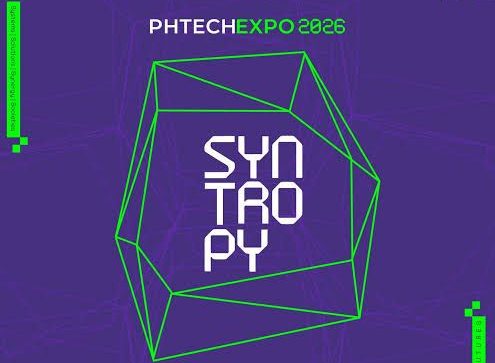
Stakeholders push for innovation, digital collaboration at Port Harcourt Tech Expo 2026
Expo urges youths to build skills, leverage AI for career success

Stakeholders in Nigeria’s technology ecosystem have called for stronger collaboration among government, the private sector, academia and innovators to accelerate digital transformation and position the country for sustainable economic growth.
The call was made at the two-day Port Harcourt Tech Expo 2026, organised by TechNexus Limited in partnership with the Niger Delta Development Commission (NDDC).
The Tech Expo 2026 was also supported by Renaissance Africa Energy, the Pana Holdings and the Rivers State Internal Revenue Service.
Held at the EUI Events Centre under the theme “Syntropy,” the expo brought together policymakers, technology experts, investors, entrepreneurs, academics and young innovators to deliberate on the role of technology in governance, education, healthcare, agriculture, energy, finance and the creative economy.
Opening the event, speakers said Nigeria must move beyond consuming technology to becoming a producer of digital solutions capable of driving economic development.
Delivering a goodwill message on behalf of the Director-General of the National Information Technology Development Agency (NITDA), Dr. Aristotle Onumo said the country’s digital future depended on inclusive development, digital literacy, artificial intelligence governance, startup growth and public-private partnerships.
He said the global economy was increasingly driven by knowledge, data and digital skills, urging Nigerians to embrace innovation and artificial intelligence.
Managing Director of the NDDC, Chief Samuel Ogbuku, described technology as a critical tool for tackling unemployment, urging young Nigerians to acquire digital skills to remain competitive in the evolving global economy.
According to him, intellectual property has become the new wealth creation platform, warning that while artificial intelligence may replace some jobs, it will also create new opportunities for those adequately prepared.
Representing the Rivers State ICT Department, Mrs. Aleruchi Elizabeth Akani identified poor coordination among stakeholders as a major challenge facing the state’s technology ecosystem and called for stronger collaboration to deepen digital development.
Chairman of the Rivers State Internal Revenue Service (RIRS), Sir Israel Egbunefu, advocated a governance model anchored on digital transformation, accountability and innovation, saying technology should be deployed to improve public service delivery and revenue administration.
Panel discussions on the opening day focused on education technology, cybersecurity, agriculture technology and the creative economy.
Participants urged schools to move from theoretical teaching to practical digital learning, improve teachers’ digital capacity and strengthen technology integration in classrooms.
Cybersecurity experts warned about the growing threat of cybercrime, calling for stronger national cyber infrastructure, improved identity management and greater investment in cybersecurity talent.
The Alliance Française advocated greater integration of French language education into Nigeria’s academic curriculum to improve global competitiveness and cross-border opportunities.
As part of its digital inclusion initiative, the organisers presented tablet computers to students of the Federal Government Girls College, Abuloma.
Participants also urged youths to deliberately develop practical skills, embrace Artificial Intelligence (AI), and strategically position themselves to remain competitive in today’s evolving job market
Speaking to participants, the facilitator, Mr. Iyene said individuals should see themselves as products whose success depends not only on acquiring skills but also on effectively packaging and presenting their value to employers and clients.
The expo later shifted attention to LegalTech, MedTech, EnergyTech, FinTech, data governance and innovation.
Speakers at the LegalTech session called for increased investment in digital education, stronger public-private collaboration and technology solutions tailored to African realities, while emphasising compliance with data protection regulations and the African Continental Free Trade Area (AfCFTA).
Delivering a keynote address on energy and sustainability, the Vice-President, Relations and Sustainability, Renaissance Africa Energy Limited, Igo Weli urged stronger collaboration among government, energy companies and host communities to ensure responsible resource development and environmental sustainability in the Niger Delta.
Healthcare experts identified fragmented medical records, poor infrastructure, unstable electricity supply, weak internet connectivity and inadequate funding as major obstacles to quality healthcare delivery.
They advocated integrated national health records, telemedicine, unique patient identification systems and closer collaboration between health technology and financial technology to improve healthcare access.
Zipline Nigeria showcased its drone-powered medical logistics system, saying it had completed more than 190,000 medical deliveries and served over six million patients.
Energy technology experts argued that affordability should take precedence over mere access, recommending decentralised solar systems, lithium-ion batteries and battery-swapping technology for electric vehicles while calling for policy reforms to address financing and regulatory challenges.
Geo-spatial technology specialist Ross Alabo George highlighted the growing application of drones and mapping technologies in agriculture, urban planning, environmental monitoring and infrastructure development, encouraging young innovators to build expertise before developing technology solutions.
The FinTech session focused on improving access to finance for small businesses through digital payments, proper record-keeping, tax compliance and data-driven credit assessment, while speakers urged African startups to build products capable of serving continental markets.
Representing PanaHoldings, Victor Itota described data as the foundation of Nigeria’s future industrial development, stressing that execution, rather than ideas alone, will determine national competitiveness.
Participants also attended masterclasses on career development, job readiness and startup pitching before young innovators showcased technology solutions during the Expo’s hackathon and pitch competition.
A recurring theme throughout the conference was that technology alone cannot transform society without skilled people, strong institutions, enabling policies and sustained collaboration among government, industry and academia.
Participants agreed that innovation, human capital development and effective implementation of policies remain critical to unlocking Nigeria’s digital and economic potential.
About Author

