

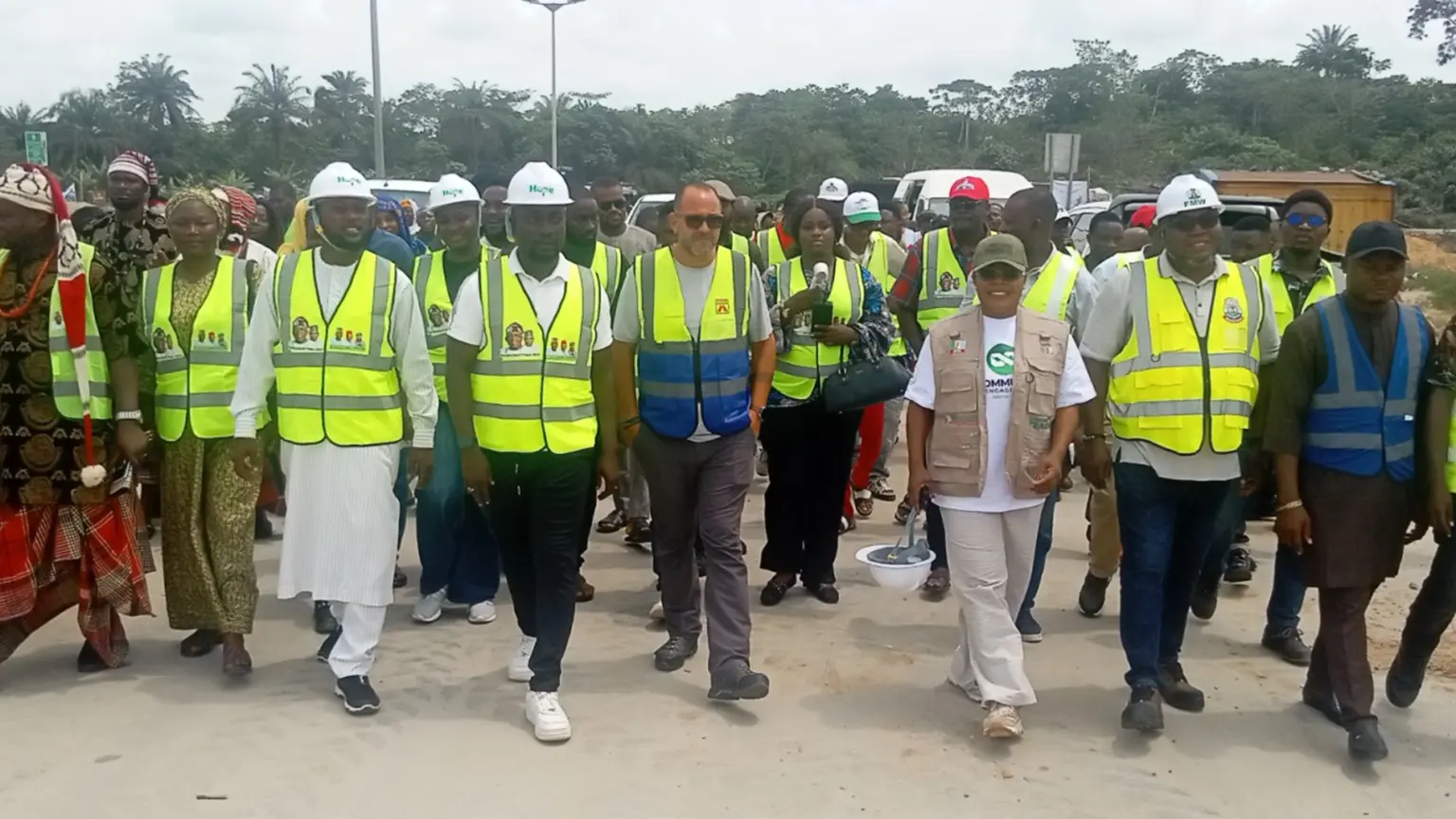
South-South Youths Inspect Lagos-Calabar Coastal Highway, Dismiss Claims Project Ends in Lagos
…Community of Comrades tours Sections 3A and 3B in Akwa Ibom, Cross River, urges regional support for project

Youths and women groups under the Community of Comrades South-South have inspected Sections 3A and 3B of the Lagos-Calabar Coastal Highway in Akwa Ibom and Cross River states, dismissing claims that the multi-billion-naira inf
rastructure project terminates at the Lekki-Epe axis of Lagos State.
The guided inspection, which brought together members of the organisation from the six South-South states and 18 senatorial districts, was aimed at enabling participants to assess the progress of construction and verify claims surrounding the project.
The delegation was led by the convener of the Community of Comrades South-South, Comrade Kevin Eyam, who also serves as Special Assistant to the Cross River State Governor on Student Affairs. He was accompanied by Hon. Gift Johnbull, the South-South Zonal Director for Infrastructure Mobilisation and Sensitisation for the Presidential Campaign Council 2027.
During the tour, the participants inspected ongoing construction activities and received briefings from officials of the Federal Ministry of Works and engineers involved in the project.
Speaking during the exercise, the group’s leadership said the decision to visit the construction sites followed public debate and conflicting narratives about the actual route and progress of the coastal highway.
The participants maintained that an on-the-spot assessment would enable them to form opinions based on what they observed rather than rely solely on reports and commentary circulating in the traditional and social media.
Eyam expressed satisfaction with the level of work observed, saying the physical evidence at the sites contradicted suggestions that the highway existed only around Lagos.
He also highlighted the employment opportunities associated with the construction work, noting that young people in host communities were participating in activities connected with the project.
According to him, the coastal highway has the potential to improve connectivity, stimulate commercial activities and create new opportunities for communities across the South-South region.
He urged residents to support infrastructure projects capable of contributing to regional development, while encouraging young people to take an active interest in monitoring and protecting public infrastructure.
Johnbull also underscored the importance of the highway to the economic future of the Niger Delta, arguing that improved road connectivity could facilitate the movement of agricultural produce, goods and services across states.
She said the region’s difficult terrain should not be regarded as an insurmountable obstacle to the construction of durable roads, pointing to the need for appropriate engineering methods and sustained political commitment.
The highway is expected to improve access to coastal communities and strengthen links between commercial centres along Nigeria’s southern coastline. Upon completion, it could also create opportunities for investment, tourism, logistics and other economic activities.
During the inspection, the engineers provided updates on construction activities along the two sections in Akwa Ibom and Cross River states.
According to information provided by project officials, Section 3A covers approximately 41 kilometres in Akwa Ibom State, while Section 3B spans about 30 kilometres in Cross River State, bringing the combined length of the two sections to approximately 71 kilometres.
The site engineer for Section 3B, Engr. Charbel Karam, said portions of the route had reached advanced stages of construction, including the installation of concrete pavement, road barriers, streetlights, walkways, drainage channels and box culverts.
He explained that work was continuing on sections affected by swampy terrain, which requires additional engineering and ground preparation before concrete pavement can be laid.
The Federal Controller of Works in Akwa Ibom State, Engr. Vincent Okoduwa, also reportedly disclosed that approximately nine kilometres of Section 3A had reached the continuously reinforced concrete pavement stage, with overall completion of the section put at about 18 per cent at the time of the inspection.
The engineers explained that construction in swampy areas requires several stages of preparation, including the removal of unsuitable materials, approval of the subgrade and placement of appropriate sub-base materials before the concrete pavement is laid.
The use of continuously reinforced concrete pavement is intended to provide a durable road surface capable of withstanding heavy traffic and challenging environmental conditions. However, the long-term performance of the highway will also depend on construction quality, drainage, maintenance and effective project supervision.
The inspection also provided an opportunity for discussions about compensation for property owners and other persons affected by the project.
Project officials said more than 90 per cent of compensation had reportedly been paid to affected persons in Akwa Ibom State, while outstanding cases were linked partly to realignments intended to avoid areas with deeper swamp conditions.
They added that cooperation from host communities remained important to the progress of construction, particularly in areas where land preparation and other activities were ongoing.
Community participation is expected to remain significant as work progresses, given the need to address concerns relating to land acquisition, livelihoods, environmental impacts and the protection of completed infrastructure.
The Lagos-Calabar Coastal Highway is one of the Federal Government’s major road infrastructure projects, planned to connect coastal areas across several southern states.
Beyond its transportation function, the project is expected to improve access to markets, reduce travel difficulties along parts of the coastline and support commercial activities in communities that have historically faced infrastructure challenges.
For the South-South region, improved connectivity could help farmers and traders move produce more efficiently, while creating opportunities for tourism, hospitality, construction-related employment and private investment.
However, the anticipated benefits will depend on the timely completion of the project, the quality of the finished road, effective maintenance and the development of complementary infrastructure.
The highway has also generated public debate over its cost, alignment, environmental implications and implementation. The inspection by the Community of Comrades South-South therefore comes amid continuing discussions about the project’s scope, progress and potential benefits.
While the participants expressed support for the project after their visit, independent monitoring, transparent reporting of construction milestones and clear communication by the relevant authorities remain important to sustaining public confidence.
At the end of the tour, the group urged residents of the South-South to assess the project on the basis of verifiable information and to support infrastructure development that could benefit the region.
The participants maintained that the highway should be viewed in the context of its potential contribution to transportation, commerce and economic integration across the southern coastline.
They also called for greater public awareness of the work being undertaken in Akwa Ibom and Cross River states, stressing that communities should be involved in protecting public infrastructure and ensuring that development projects deliver lasting benefits.
The group expressed optimism that the completion of the highway would strengthen connections among communities, improve access to economic opportunities and contribute to the broader development of the Niger Delta.
As construction continues, attention will remain on the pace of work, the resolution of outstanding compensation issues and the Federal Government’s ability to deliver the project in accordance with approved specifications and timelines.
About Author

