

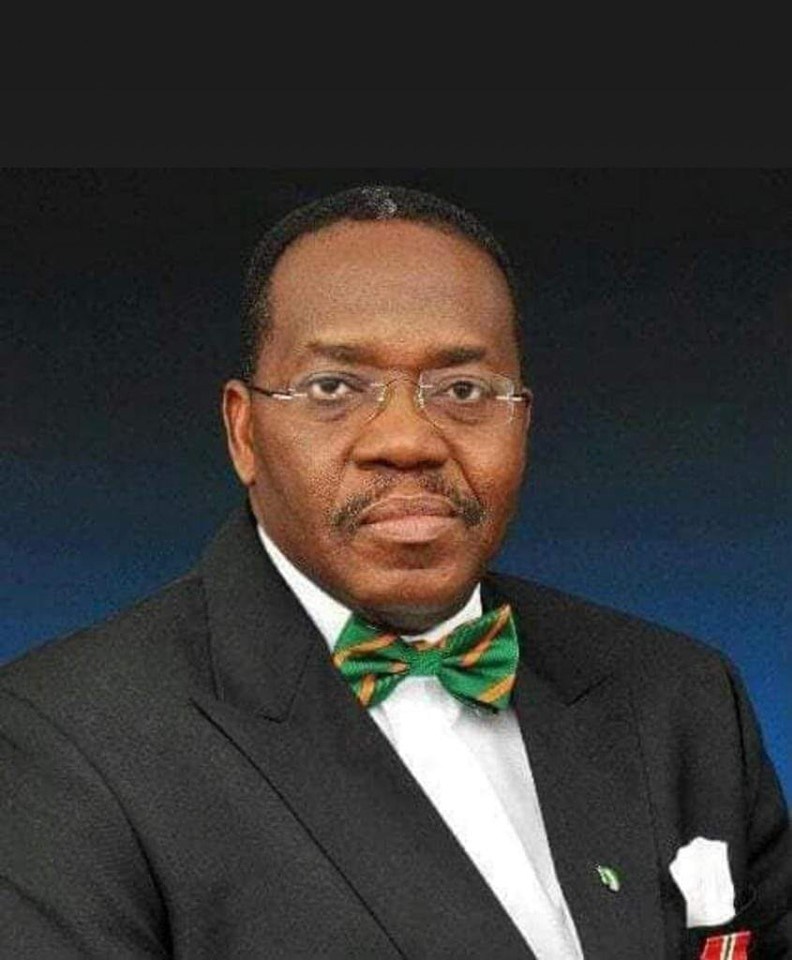

The National Chairman of the Pan Niger Delta Forum (PANDEF), Ambassador Dr. Godknows Bolade Igali, has called for urgent and comprehensive intervention in the deteriorating road infrastructure across Nigeria’s South-South region, warning that poor roads are taking a heavy toll on businesses, transportation and the livelihoods of residents.
Igali made the call while appearing on Channels Television’s The Morning Brief on Wednesday, August 26, 2026, during a discussion on the deplorable condition of the Benin–Agbor–Asaba road and the wider infrastructure challenges confronting the Niger Delta.
The PANDEF chairman said the condition of major roads in the region required more than piecemeal interventions, stressing the need for the Federal Government to undertake a comprehensive review of road projects and the concessions awarded to contractors.
His comments came against the backdrop of growing public concern over the condition of the Benin–Agbor–Asaba corridor, which has become a major source of hardship for motorists, commuters, transport operators and businesses operating along the route.
According to Igali, although the Federal Government’s recent response to the crisis was encouraging, the intervention needed to be extended to other troubled roads across the South-South.
He specifically urged the Minister of Works, David Umahi, to undertake a comprehensive review of the concessions and the capacity of contractors handling major road projects.
“There may be a need to have a more comprehensive holistic overview of the concessions and the state of what the contractors are doing,” Igali said during the interview.
He expressed concern that, in some locations, equipment could be seen at project sites and some construction activities were taking place, yet the level of progress remained inadequate compared with the urgency of the situation.
“You see equipment and some level of work being done but not much progress is seen,” he stated.
Roads and the South-South economy
Igali’s concerns extend beyond the inconvenience suffered by motorists. The PANDEF chairman stressed that the poor state of roads has direct consequences for economic activities in the South-South, a region whose economy depends heavily on the movement of people, agricultural produce, petroleum-related activities, manufactured goods and other commercial products.
Bad roads increase transportation costs, lengthen travelling time and make it more difficult for businesses to move goods and services efficiently.
For communities that depend heavily on road transportation to connect with major commercial centres, deteriorating highways can also contribute to higher prices of goods and reduced economic opportunities.
The situation is particularly significant in the Niger Delta, where several communities remain dependent on a limited network of major highways linking states and riverine areas to the rest of the country.
Benin–Asaba road under scrutiny
The Benin–Agbor–Asaba road has recently attracted renewed attention following widespread complaints by commuters over its condition.
Minister of Works David Umahi inspected the Benin–Agbor–Asaba corridor on Tuesday and apologised to commuters over the difficulties they have been experiencing.
Igali acknowledged the government’s response, noting that the presence of the minister, the National Assembly and the Niger Delta Development Commission (NDDC) demonstrated that the authorities were beginning to respond to public concerns.
However, he maintained that the response should be broadened and accelerated.
“We are happy by the response, by the fact that you have the minister, the National Assembly, the NNDC shows responsiveness but I think it should be escalated to all other areas where there are concerns,” he said.
Calls for contractors’ competence to be reviewed
A major concern raised by the PANDEF chairman was whether contractors handling some of the region’s major road projects possess the technical and financial capacity to deliver within reasonable timeframes.
Igali therefore called for a review of the concession arrangements and the performance of contractors, particularly where projects have experienced prolonged delays despite the deployment of equipment and commencement of construction.
His position effectively places responsibility on government agencies to ensure that contractors entrusted with critical infrastructure are capable of meeting their contractual obligations.
He argued that a road project of strategic economic importance should not be allowed to remain in a state of prolonged deterioration while commuters and businesses continue to bear the consequences.
PANDEF seeks wider intervention
The PANDEF chairman’s comments also highlight a longstanding concern in the Niger Delta: the need for infrastructure development to match the region’s contribution to Nigeria’s economy.
For decades, the South-South has remained central to Nigeria’s oil and gas economy, while several communities continue to face inadequate transportation infrastructure.
Igali’s call therefore represents an appeal for the Federal Government to look beyond individual roads and develop a coordinated infrastructure strategy for the entire region.
He welcomed the recent attention given to the Benin–Agbor–Asaba road but urged the authorities not to limit the intervention to that particular corridor.
He said similar attention should be given to other roads across the South-South where residents and businesses are experiencing difficulties.
Economic consequences
Poor road infrastructure has implications beyond transportation. When major highways become difficult to navigate, businesses are forced to spend more on vehicle maintenance and fuel, while transport operators often increase fares to compensate for higher operating costs.
Farmers and traders can also suffer losses when agricultural produce spends excessive time in transit, while commuters lose productive hours travelling between communities and urban centres.
For the South-South, where many communities are geographically dispersed and connected by relatively few major highways, the consequences can be particularly severe.
The PANDEF chairman’s intervention therefore comes at a time when infrastructure development is increasingly being viewed as essential to stimulating investment, improving productivity and creating employment.
Call for decisive action
Igali urged the Federal Government to sustain the momentum generated by the recent inspection of the Benin–Agbor–Asaba road and replicate such interventions on other critical highways across the region.
He also called for greater scrutiny of contractors and concession arrangements to ensure that projects are delivered to specification and within reasonable timelines.
The PANDEF chairman’s position is that government responsiveness must translate into visible improvement on the ground, particularly on roads that serve as major economic corridors.
The Benin–Agbor–Asaba road remains one of the latest examples of how deteriorating infrastructure can affect thousands of road users and businesses, but Igali’s intervention suggests that the problem is broader and requires a regional response.
For residents and businesses across the South-South, the expectation now is that the renewed attention from the Federal Government will result in accelerated rehabilitation and reconstruction of critical roads, improved connectivity and an easing of the economic burden imposed by poor transportation infrastructure.
Source: Channels Television interview with PANDEF National Chairman, Amb. Dr. Godknows Bolade Igali.
https://www.facebook.com/share/v/1DUvTsJNzP/
About Author

