

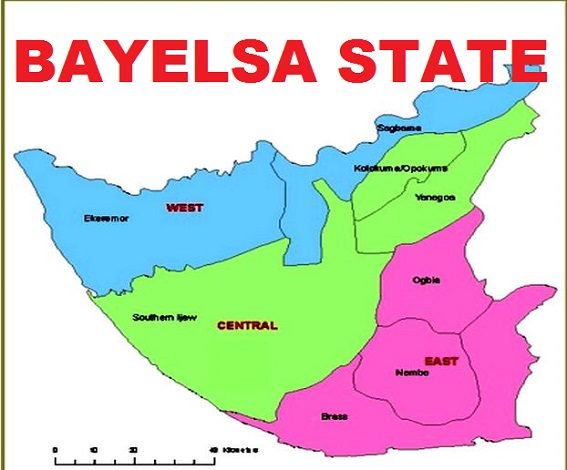

The Historic Quest for an Ijaw State
The birth of Bayelsa State in 1996 was the fulfillment of a dream nurtured by generations of Ijaw leaders, activists, and intellectuals. For decades, the Ijaw—the fourth largest ethnic group in Nigeria—had clamored for recognition and autonomy, arguing that despite producing the nation’s oil wealth, they remained marginalized in the old Rivers State.
As the late nationalist Chief Harold Dappa-Biriye once said: “The Ijaw man is not asking for privilege; he is asking for justice, a place where his children can stand tall in their own land.”

That yearning reached its climax under General Sani Abacha’s regime. On October 1, 1996, Bayelsa was announced as one of six new states created to meet long-standing agitations. Its name, Bayelsa, was drawn from BA (Brass), YEL (Yenagoa), and SA (Southern Ijaw), signifying unity from the creeks to the capital.
The Military Foundations (1996–1999)
The earliest years were years of survival. Navy Capt. Phillip Ayeni (1996–1997), the pioneer Military Administrator, started from scratch—without offices, housing, or even a proper Government House. “We started from zero,” he once recalled, “but we carried hope.”
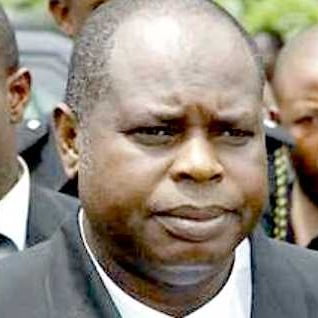
Navy Capt. Omoniyi Olubolade (1997–1998) consolidated on those beginnings by focusing on security and modest infrastructure. His tenure was followed by Navy Capt. Paul Obi (1998) and Lt. Col. Paul Edor Obi (1998–1999), who managed a fragile new state and prepared it for the return to democracy.
The Civilian Dawn: Alamieyeseigha’s Dream (1999–2005)
Democracy returned in 1999, and Chief Diepreye Solomon Alamieyeseigha became Bayelsa’s first civilian governor. Nicknamed the Governor-General of the Ijaw Nation, Alamieyeseigha saw the state as a divine mandate. “God gave us Bayelsa so that the Ijaw man will never again be a stranger in Nigeria’s federation,” he declared.
He prioritized road construction, Government House development, and support for indigenous media. He also introduced monthly financial support for local newspaper publishers, which gave voice to the Ijaw press.
Goodluck Jonathan and Bayelsa’s Rise (2005–2007)
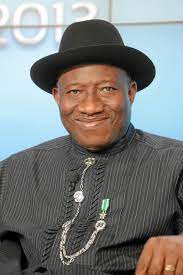
After Alamieyeseigha’s impeachment, his deputy, Dr. Goodluck Jonathan, assumed office. Jonathan’s governorship was short-lived, but he invested in education and human capital. His ascent to Vice President in 2007, and later President in 2010, gave Bayelsa global recognition. “Our creation gave the Ijaw man a seat at the national table. But with that seat comes responsibility to develop our land,” Jonathan would later reflect.
Sylva’s Urban Drive (2007–2012)
Chief Timipre Sylva became governor in 2007. His administration emphasized urban renewal and road expansion. Projects such as the Gloryland Castle and township roads gave Yenagoa a facelift, though political turbulence often overshadowed his tenure.
Dickson’s Restoration Government (2012–2020)
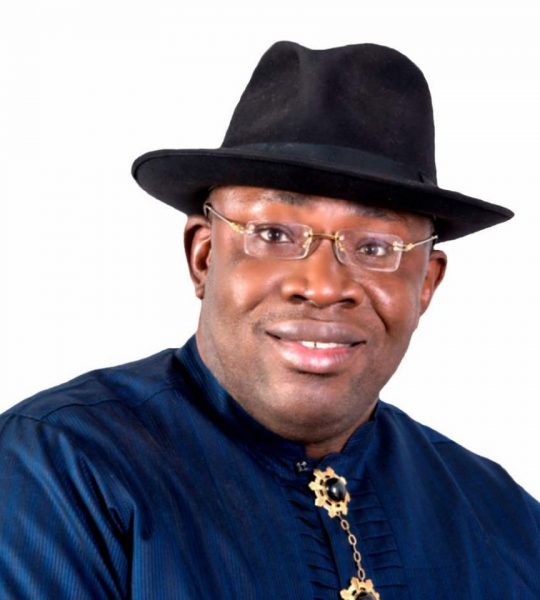
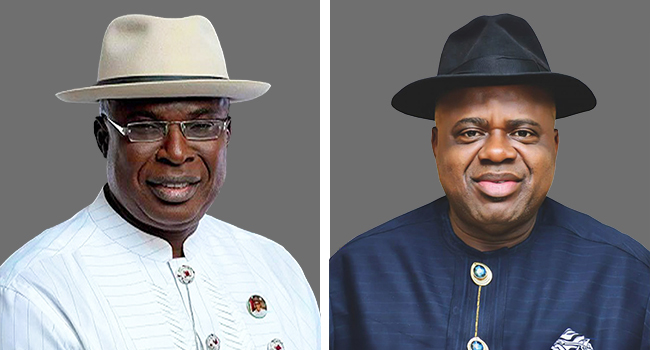
In 2012, Hon. Seriake Dickson launched what he called the Restoration Government. His hallmark was education—he built model schools across local government areas, expanded the Niger Delta University, and invested in scholarship schemes.
He also worked on health centers, housing estates, and rural road projects. As Dickson often remarked: “Bayelsa must grow its human capacity as much as its infrastructure.”
Diri and the Prosperity Era (2020–date)
In 2020, Senator Douye Diri assumed office after a dramatic Supreme Court judgment. His Prosperity Government has focused on uniting Bayelsans and expanding development projects.
He has invested in road expansion into difficult riverine terrain, sports development—where Bayelsa Queens and Bayelsa United achieved national and continental glory—and major projects such as the nine-storey state secretariat complex and the 60MW gas turbine for reliable electricity.
In his 29th anniversary broadcast, Governor Diri captured the mood: “The birth of Bayelsa was the birth of hope. Our duty is to nurture that hope into a future of prosperity for all.”
29 Years After: Struggles, Gains, and the Road Ahead
From Ayeni’s makeshift beginnings to Diri’s modern infrastructural push, Bayelsa’s journey has been one of resilience. Each governor—military or civilian—added a block to the foundation: some laid structures, others deepened education, some brought global attention, while others expanded roads and institutions.
Yet, challenges remain—environmental degradation, unemployment, and underdevelopment. But Bayelsa at 29 is a symbol of the Ijaw spirit: resilient, hopeful, and determined to chart its own destiny.
About Author

