


The Bayelsa State Government has released details of its financial performance for the first quarter of 2026, highlighting revenue inflows, expenditures and ongoing infrastructure projects as part of efforts to deepen transparency and accountability.
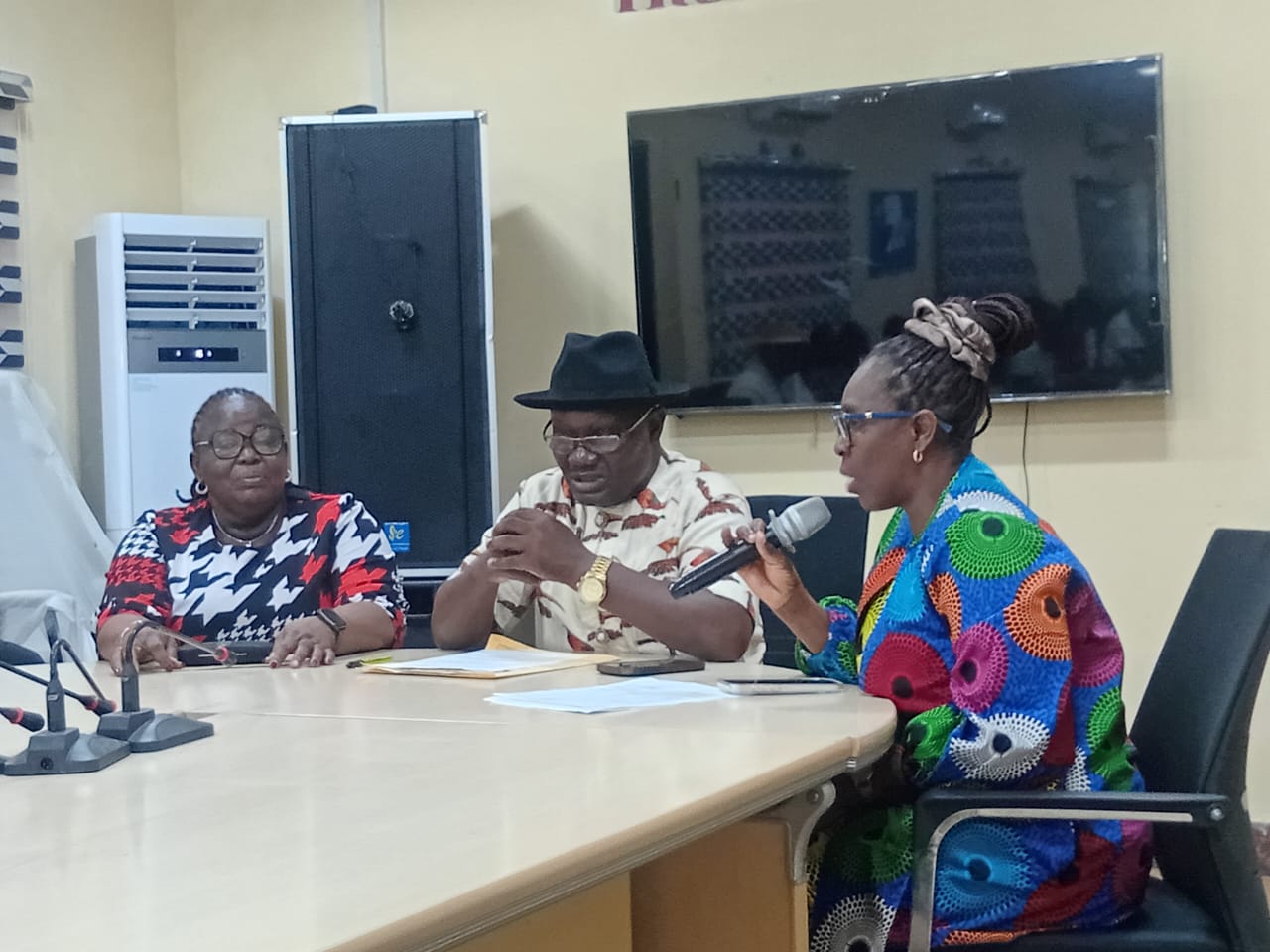
The disclosure was made during a media briefing in Yenagoa, where the Commissioner for Information, Orientation and Strategy, Ebiuwou Koku-Obiyai, outlined the administration’s transparency framework, while the Special Adviser to the Governor on Treasury and Accounts, Timipre Seipulo, presented the detailed financial figures.
The Accountant-General, Tokoni Ifidi, was also part of the briefing.
Koku-Obiyai said the disclosure of income and expenditure for January to March 2026 demonstrates transparency in practice and reflects prudent management of public resources under Governor Douye Diri.
Presenting the breakdown, Seipulo said gross receipts from the Federation Account in January stood at ₦36.91 billion, with net inflow of ₦35.15 billion after deductions of ₦1.75 billion. In February, gross receipts rose to ₦40.04 billion, translating to ₦38.44 billion net after ₦1.59 billion deductions, while March recorded ₦41.69 billion gross and ₦40 billion net inflow after ₦1.61 billion deductions.
He added that other revenues from Internally Generated Revenue (IGR), investments and ecological transfers contributed between ₦8.79 billion and ₦13.73 billion monthly.
On expenditure, Seipulo disclosed that January recorded total outflows of ₦20.29 billion, including about ₦12 billion spent on salaries and related costs. February outflows stood at ₦20.94 billion, while March rose to ₦30.34 billion due to increased salary obligations and loan repayments.
According to him, salary arrears, pensions and grants to tertiary institutions were consistently funded throughout the quarter.
He further explained that despite monthly deficits, the state maintained fiscal stability by leveraging prior balances. January recorded a deficit of ₦27.34 billion but closed with a balance of ₦60.87 billion after drawing from an opening balance of ₦88.20 billion. February posted a deficit of ₦1.82 billion with a closing balance of ₦56 billion, while March ended with a ₦1.8 billion deficit and a balance of ₦56.82 billion.
Seipulo noted that derivation revenue remained the largest contributor to the state’s income, followed by statutory allocations and Value Added Tax (VAT). He said IGR ranged between ₦2.53 billion and ₦3.47 billion monthly, while investment income contributed over ₦300 million monthly.
He also disclosed that deductions from federal allocations, including loan repayments and statutory recoveries, averaged about ₦1.5 billion monthly, adding that the state completed the final repayment of a long-standing commercial bank loan in March.
On infrastructure, Koku-Obiyai said the administration has prioritised the completion of legacy projects across the three senatorial districts.
She recalled that President Bola Ahmed Tinubu recently commissioned key projects including the dualised New Yenagoa City Road linking the airport route, the Angiama-Oporoma Bridge, the Sagbama-Ekeremor Road and a 60-megawatt gas turbine plant.
She added that former Vice President Yemi Osinbajo is expected to commission additional projects such as the Agbura Oxbow Lake Road and a referral hospital in Oporoma.
Other ongoing projects, according to her, include a FIFA-standard stadium at Igbogene and a nine-storey secretariat complex.
Reiterating the administration’s commitment, the commissioner assured that no ongoing project would be abandoned, stressing that Governor Diri is determined to complete all projects within the lifespan of his tenure.
On power, she said steady progress is being made on the gas turbine project, noting that it would become operational once all safety installations are completed.
“The government will not compromise safety for speed. We urge the public to remain patient as the project nears completion,” she said.
Koku-Obiyai called on residents to remain law-abiding and support government initiatives, adding that regular financial briefings would continue to strengthen transparency and public trust.
About Author

