


By Thomas Peretu
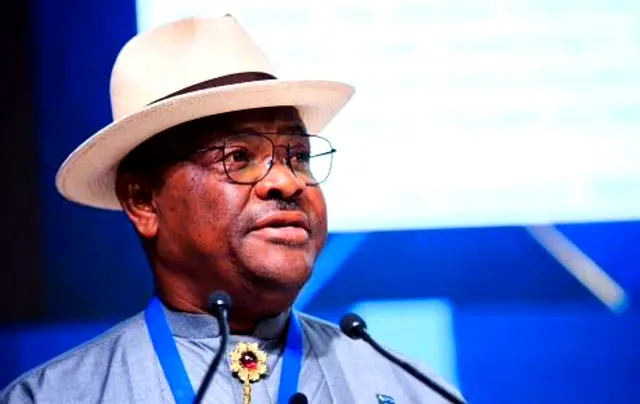
Many Nigerians may disagree with the politics of Nyesom Wike. His style is often combative, his language occasionally coarse and controversial, and his methods frequently provoke debate. I have never been a Wike’s apostle. Neither do I share in his catholic.
Yet, even his critics would concede one point: Wike understands the power of political communication. Much more than many members of our elite political class.
Unlike many public office holders who retreat behind official statements and press releases, Wike has made public engagement a central part of governance. Its a pragmatic and smart decision. His relationship with the media is neither accidental nor occasional; it is deliberate, strategic and sustained.
This did not begin when he became Minister of the Federal Capital Territory. It is a habit he cultivated from his early years as Governor of Rivers State.
Through regular media interactions, interviews and quarterly press briefings, he consistently explained government policies, defended his decisions and responded to public concerns.
Such engagements may be expensive to organise, but they are investments in public trust.
The greatest advantage of continuous communication is that it leaves little room for speculation. In politics, silence is rarely neutral. When governments fail to explain their actions, rumours fill the vacuum.
Misconceptions harden into public opinion, and public opinion eventually shapes political reality. Regular communication helps to prevent that cycle by keeping citizens informed about why government acts as it does.
One of Wike’s most notable initiatives has been his periodic media parley with senior journalists. These sessions provide an opportunity for questions that ordinary citizens themselves would ask. In that sense, they serve as a bridge between government and the governed.
To be sure, Wike has not always handled these engagements perfectly. Earlier this year, he drew widespread criticism after saying he would have “shot” a television presenter on the screen of his television over comments made on air. Although he later apologised and argued that his remarks had been taken out of context, the episode illustrates an important lesson: communication is not only about frequency; it is also about tone, restraint and respect for dissenting voices.
The broader lesson is one that many public officials should embrace. Governments should not wait until crises erupt before speaking to the people. Communication should not resemble a fire brigade rushing to extinguish flames after public anger has spread.
Trust is built through consistent engagement, not occasional damage control.
This is one area where many governments, including the present APC administration at the centre, have struggled. Too often, official responses are reactionary instead of being proactive. They usually come late, fail to address citizens’ real concerns, or create fresh controversies. The Cardinal Onaiyekan’s recent face off with presidential spokespersons is a typical example of a missed opportunity to earn political communication capital.
Effective communication is not simply issuing statements; it is listening, explaining and responding with clarity and credibility.
The corporate world understood this principle long ago. Coca-Cola continues to advertise relentlessly, not because people have forgotten the brand, but because relevance must constantly be renewed.
Visibility is an investment, not an afterthought. Politics operates by much the same logic. Leaders who disappear from public conversation should not be surprised when others define them in their absence.
Some political observers have argued that Governor Siminalayi Fubara’s communication with his supporters during his political crisis was inadequate. He rarely relates with the people. Whether one agrees with that assessment or not, it reinforces an important principle: political communication is not a monologue delivered from the seat of power. It is a dialogue that builds understanding, confidence and shared purpose.
Politicians should therefore not wait until election season before rediscovering the route to the hearts of the electorate. Four years is ample time to cultivate a meaningful relationship with the people through openness, consistency and honest engagement.
Power may win elections, but communication sustains legitimacy. Governments that stop talking eventually discover that silence has its own spokesman—the rumour mill. Wise leaders communicate not merely to be seen or heard, but to ensure that the people always understand where they stand and why.
I hope our politicians from Bayelsa State are learning from these examples. They are life lessons. This is the time to redefine your strategic communication mechanism. Don’t wait untill it is too late.
About Author

