

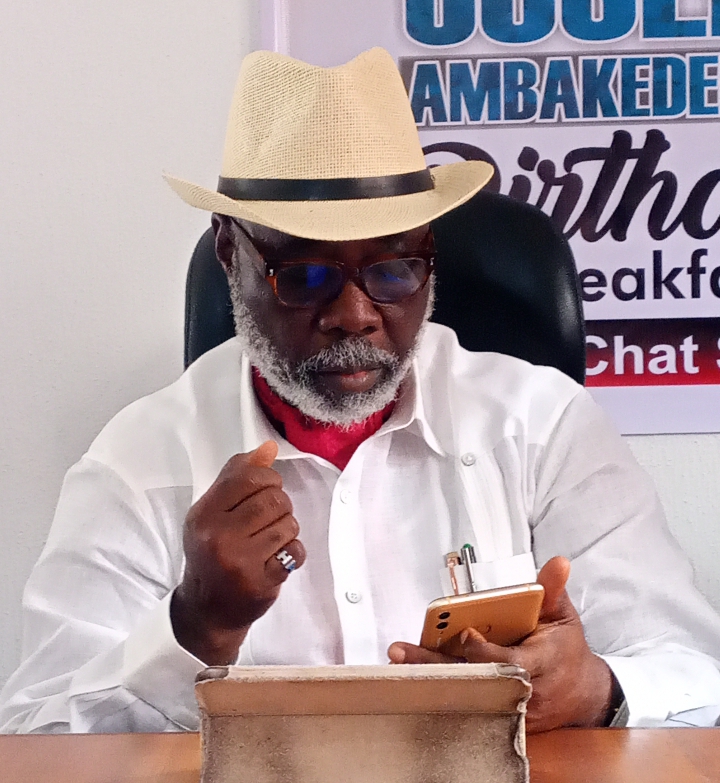

The Convener of the South-South Reawakening Group, Joseph Ambakederimo, has declared that the outcome of Nigeria’s 2027 general election is already predictable, citing the growing political momentum of the All Progressives Congress (APC) as a decisive factor.
Ambakederimo made the assertion during an interview on “Focus Nigeria,” a current affairs programme on African Independent Television, where he analysed the evolving dynamics of Nigeria’s political landscape.
He described the ongoing wave of defections into the ruling party as unprecedented, noting that it signals a significant realignment ahead of the next election cycle.
According to him, the movement of governors and key political figures into the APC should be seen as part of the natural evolution of democratic politics rather than a threat to it.
“Politics is dynamic, and politicians naturally move to where they believe the interests of their people will be better protected,” he said.
Ambakederimo dismissed concerns that Nigeria is drifting toward a one-party state, arguing that the real issue lies with opposition parties that have failed to present a credible and compelling alternative to the ruling party.
He further highlighted the political trajectory of Bola Ahmed Tinubu as a case study in strategic leadership.
He recalled Tinubu’s role as former governor of Lagos State, where he built a resilient opposition structure that eventually contributed to the emergence of the APC as a dominant national force.
According to Ambakederimo, the president has evolved into a political institution due to his long-term strategic approach and consistency in party building.
The South-South leader also called on political actors in the Niger Delta to deepen their participation in national politics, warning against reliance on regional platforms.
He argued that such platforms often fail due to their limited national reach and influence.
“The South-South must be part of the centre where national decisions are made if it hopes to protect its interests,” he stated.
On the possibility of an opposition coalition ahead of 2027, Ambakederimo acknowledged ongoing efforts but cautioned that unity alone would not guarantee success.
He noted that the ability of opposition leaders to agree on a single presidential candidate and set aside personal ambitions would be critical in determining their chances.
He also defended the decision by President Tinubu to remove fuel subsidy, describing it as a bold but necessary reform that previous administrations had avoided.
While acknowledging the hardship caused by the policy, he maintained that the subsidy regime had become unsustainable.
Commenting on developments in Bayelsa State, Ambakederimo described ongoing infrastructure projects as foundational steps toward long-term development, particularly efforts to improve road connectivity and open up the state to neighbouring regions.
He stressed that infrastructure development must precede widespread economic benefits, adding that the state is gradually positioning itself for sustainable growth.
Ambakederimo concluded by urging Nigerians to become more actively involved in the democratic process, emphasizing the need for civic engagement beyond social media discourse.
He said democracy can only thrive when citizens actively participate and hold their leaders accountable.
About Author

