

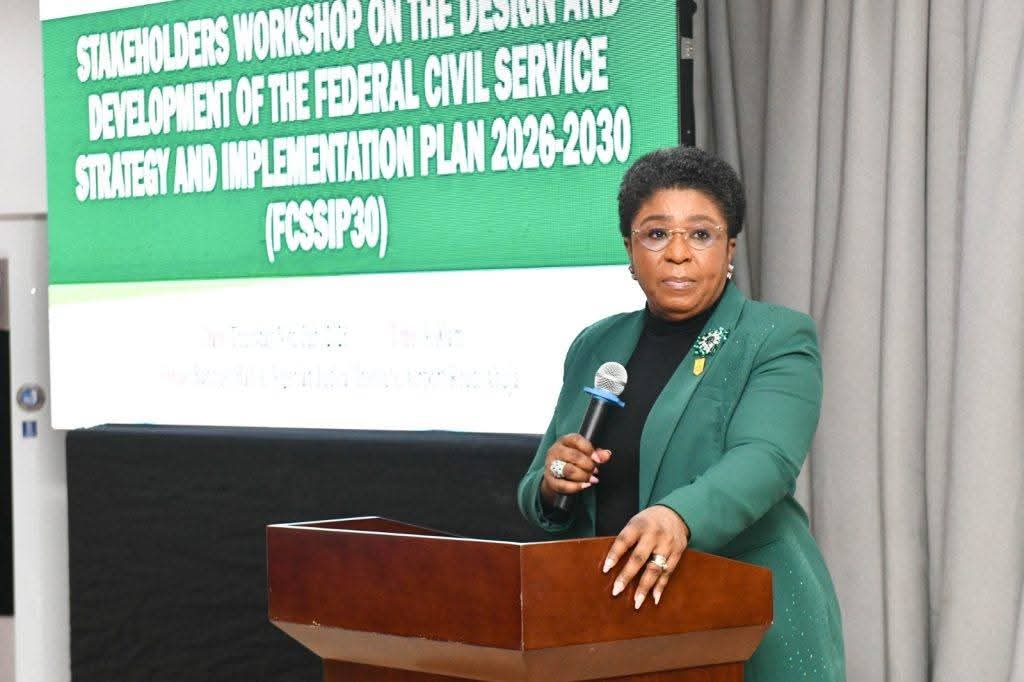

By Thomas Peretu
If the likes of Ahmed Joda, Phillip Asiodu and Allison Ayida—the legendary corps of Nigeria’s super permanent secretaries—were with us today, they would probably shudder at the level of administrative ineptitude confronting the public service. It is almost inconceivable that a Head of the Civil Service of the Federation would publicly acknowledge negligence in the discharge of official responsibilities, as reportedly emerged during the recent House of Representatives probe of the PFIC saga.
That admission, though courageous, is more than a personal failing. It offers a glimpse into deeper institutional weaknesses and raises troubling questions about accountability, supervision and due diligence within the machinery of government.
Had government functioned this way during Nigeria’s most turbulent years, General Yakubu Gowon could hardly have relied so heavily on the super permanent secretaries to steer the affairs of state. Men like Ahmed Joda, Allison Ayida and Phillip Asiodu many others who held sway in that era were the engine room of government. They combined institutional memory, administrative discipline and intellectual rigour to keep the machinery of state running through war and uncertainty. While political and military leaders made policy, these distinguished civil servants ensured that government never lost its rhythm.
Sadly, those values have steadily eroded.
The PFIC affair demonstrates what happens when oversight fails. A system built on layers of scrutiny should not permit avoidable lapses that ultimately embarrass the nation.
Oversight is not a ceremonial function; it is the immune system of government. It exists to detect errors before they become scandals and to ensure that official actions comply with established procedures. When that system breaks down, institutions lose credibility and public trust suffers.
For a government already struggling with a trust deficit, such episodes only deepen public scepticism.
The enduring lesson is that due diligence is not a bureaucratic ritual; it is the lifeblood of public administration.
Every file must be scrutinised, every recommendation verified and every approval tested against legality, propriety and the public interest.
Public officers are custodians of the people’s trust, and leadership demands accountability for everything that happens under their watch.
The PFIC controversy should therefore become a catalyst for reform.
Nigeria does not lack capable public servants. What it needs is a return to the culture of professionalism, discipline and vigilance that once defined its civil service. Publi institutions are only as strong as the standards they uphold.
When due diligence becomes optional, governance becomes vulnerable. When competence, oversight and accountability become the norm, government earns the confidence of the people once again.
About Author

