

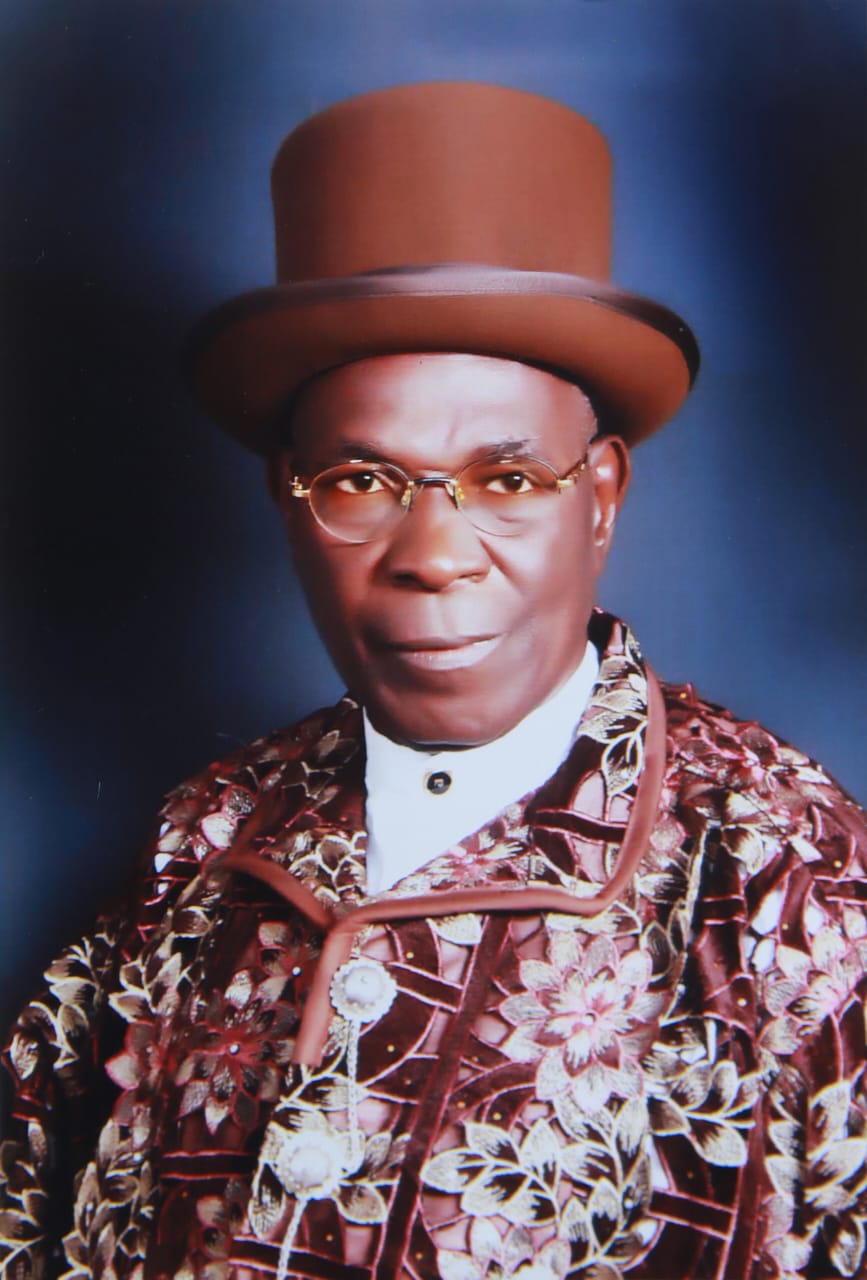

By
Professor Gesiye Salo Angaye
Professor of Development Economics and former Commissioner of Budget and Economic Planning, Bayelsa State, Nigeria
“The world has seen too much blood and suffering. Give peace a chance. Allow the world to breathe”
In every generation, history pauses at certain moments; moments when the decisions of one leader echo far beyond borders, shaping not only nations but the very soul of our shared humanity. This is one of such moments.
Mr. President, I write not in defiance, but in deep respect; not in anger, but in concern; not as an adversary, but as a voice among many across the world who watch, hope, and quietly worry.
The office you hold carries extraordinary weight. Its influence stretches from the streets of American cities to the villages of Africa, from the oil routes of the Middle East to the fragile homes of displaced families in conflict zones. With such reach comes not only power but responsibility of historic proportions.
Today, the world appears burdened, heavy with conflict, strained by uncertainty, and wearied by the persistence of suffering. The tensions surrounding Iran, the devastation in Gaza supported by American policy positions, and political interventions in places like Venezuela have created an atmosphere where peace feels distant and fragile.
These are not abstract geopolitical manoeuvres; they are lived realities. They translate into disrupted childhoods, grieving parents, shattered infrastructure, and futures rewritten by force rather than hope.
Equally concerning are policy shifts that reverberate through the most vulnerable layers of society. The cancellation of Diversity, Equity, and Inclusion (DEI) programmes signals to many a retreat from the ideals of fairness and representation.
The scaling back of USAID operations has reportedly left gaps in life-saving assistance in parts of the developing world, where even modest support can mean the difference between survival and despair. Institutions such as the Catholic Church, long involved in welfare and humanitarian outreach, face reduced support at a time when their services are needed most. Even within the United States, reduced access to Medicaid raises difficult questions about the social safety net in one of the world’s wealthiest nations. At the initial phase of the conflict in March 2026, the US was spending approximately $890 million to over $900 million per day in military operations against Iran. These huge sums if reinjected into above mentioned programmes will be very impactful to lives of millions of people.
It is important to acknowledge that leadership often involves difficult trade-offs. Decisions are rarely simple, and the pressures of governance can demand firmness, speed, and resolve. It is also fair to recognise that some of these actions may stem from a genuine desire to protect national interests or to defend vulnerable populations such as persecuted Christian communities in places like Nigeria. Such intentions, where they exist, deserve recognition.
But intention, no matter how noble, must be matched with execution that reflects compassion, restraint, and an awareness of unintended consequences.
The world today has seen too much blood.
There is a quiet exhaustion spreading across nations, a fatigue not just of conflict, but of the normalisation of suffering. Each new escalation, each policy that deepens hardship, adds to a growing sense that humanity is losing its balance between strength and mercy.
Nowhere is this interconnectedness more evident than in the unfolding crisis around the Strait of Hormuz. As one of the most critical arteries for global oil supply, its disruption or closure does not remain a regional issue. It sends shockwaves through economies worldwide, raising fuel prices, straining already fragile markets, and placing additional burdens on ordinary people far removed from the conflict itself.
A farmer in Africa, a small busines
s owner in Asia, a commuter in Europe, all feel the ripple effects of decisions made thousands of miles away.
This is the paradox of modern power: actions taken in the name of national strength can inadvertently amplify global vulnerability.
Mr. President, history often distinguishes between leaders who commanded power and those who elevated humanity. The difference lies not merely in decisions made, but in the spirit with which they are carried out. Strength is essential, yes, but strength without grace can harden the world. Power is necessary but power without compassion can distance a leader from the people whose lives are most affected.
There is, however, another path.
A path where firmness is balanced with empathy. Where strategic interests are pursued without losing sight of human dignity. Where global leadership is defined not only by dominance, but by the ability to de-escalate, to heal, and to unify.
The United States has long stood as a symbol, an idea as much as a nation. For many, it represents possibility, justice, and hope. That symbolism carries immense influence, especially in times of crisis. When America leans toward peace, the world often follows. When it leans toward conflict, the consequences are equally magnified.
This is why your choices matter so profoundly not just for Americans, but for humanity at large.
The question before you is not simply one of policy, but of legacy.
How will this period be remembered?
Will it be seen as a time when power intensified divisions, or as a moment when leadership rose above them? Will it reflect a world pushed further into cycles of suffering, or one where a deliberate pivot toward peace began?
There is no denying the complexity of global politics. Yet, within that complexity lies a simple, enduring truth: people everywhere desire peace. They long for stability, for opportunity, for the chance to live without fear. These are not political aspirations, they are human ones.
And so, this is a humble appeal.
Let there be space for grace in governance.
Let policies be shaped not only by strength, but by compassion. Let interventions be guided not only by strategy, but by foresight into their human cost. Let the pursuit of justice not become entangled with the perpetuation of suffering.
If the goal is to protect the weak, whether they are Christians in Nigeria or vulnerable populations anywhere else, then let that protection be holistic. Let it uplift without inadvertently harming others. Let it heal rather than deepen wounds.
The world does not ask for perfection. It asks for balance.
It asks for leadership that recognises when to act and when to pause. When to assert and when to reconcile. When to stand firm and when to extend a hand.
Mr. President, there is still time to shape the narrative of this moment. There is still time to shift the course from escalation to restoration, from tension to dialogue, from hardship to hope.
Give peace a chance. “He who gives no peace, gets no peace’’.
Allow the world to breathe again.
Let this be remembered not as an era defined by the weight of conflict, but as one redeemed by the courage to choose a different path, the path of humanity, of compassion, and of enduring peace.
About Author

