


By
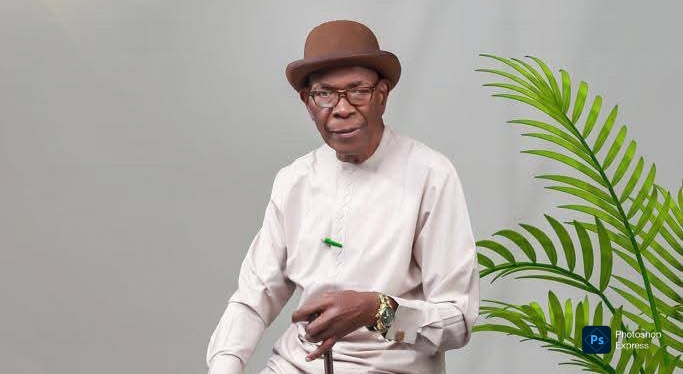
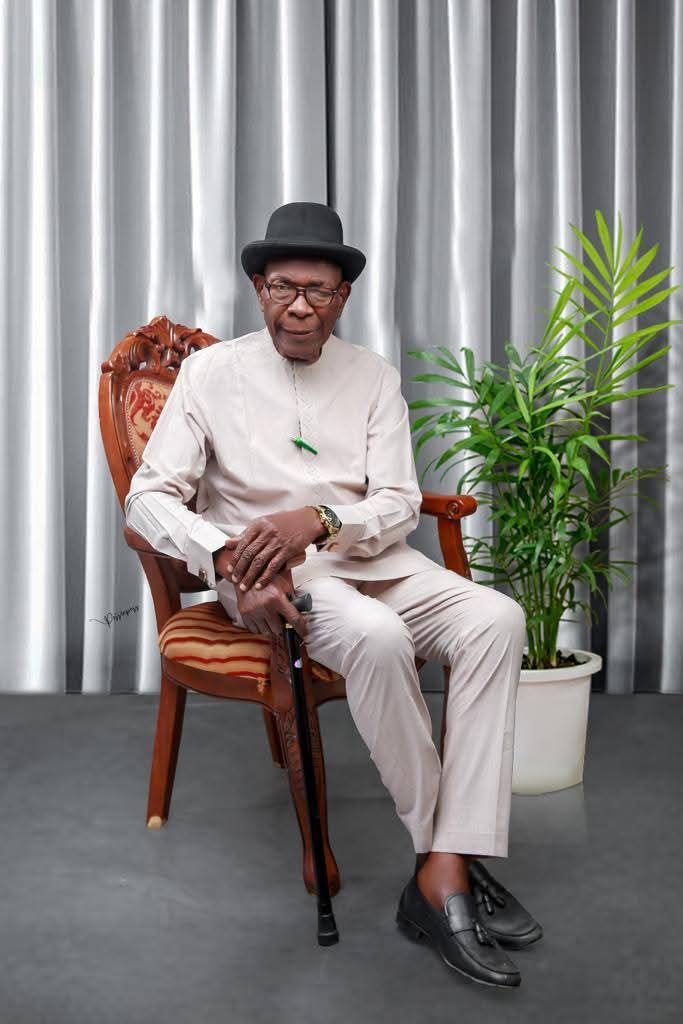
Prof. Gesiye Salo Angaye
Abstract
This chapter reflects on ninety years of lived experience through the combined lenses of
development economics, Nigerian sociocultural history, moral philosophy, and existential
inquiry. Moving from autobiographical reflection to broader theoretical engagement, it
interrogates the meaning of struggle, the limits of material accumulation, the sociopolitical
evolution of Nigeria, and the enduring questions of origin, destiny, and moral accountability.
The chapter argues that life’s deepest significance lies not in acquisition but in moral formation,
relational continuity, and conscious participation in mystery.
1. Introduction: When Development Turns Inward
For decades, my intellectual labor focused on development—poverty reduction, institutional
reform, governance failures, and economic transformation. Like many scholars shaped by
postcolonial African realities, I believed that national advancement required disciplined
planning, structural reform, and moral leadership.
Yet at ninety years old, the analytic gaze turns inward.
If development economics measures the progress of nations through growth rates,
institutional capacity, and human development indicators (Todaro & Smith, 2021; United
Nations Development Programme [UNDP], 2023), what measures the development of a life?
Is life merely an accumulation of human capital? A sequence of economic rational choices? A
biological episode bounded by birth and death? Or is it a moral and metaphysical journey
embedded within mystery?
This chapter represents a philosophical reckoning after nine decades of participation in
Nigerian history and intellectual life.
2. The Privilege of Reaching Ninety
To reach ninety years is not merely to survive; it is to witness history passing through one’s
own body. It is to have lived through eras that younger generations read about in textbooks.
It is to have seen hope rise and decline, institutions built and weakened, values strengthened
and eroded. On February 18, 2026, I turned ninety.
Ninety years ago, I did not choose to be born. I did not choose the geography of my childhood.
I did not choose the economic conditions into which I entered. Yet I have spent nine decades
making choices within circumstances I did not design. This is perhaps the first lesson of life:
We do not choose our beginning, but we participate in our unfolding.
At ninety, one’s reflections are not speculative philosophy; they are distilled experience.
3. Childhood, Poverty, and the Architecture of Aspiration
I was born into a Nigeria still under colonial rule. Infrastructure was limited. Opportunity was
uneven. Education was scarce and precious. In many communities, schooling was not
guaranteed; it was a privilege secured through sacrifice.
In my early years, life was not defined by abstract existential questions. It was defined by
survival, discipline, and aspiration. Education was seen not merely as personal advancement
but as collective emancipation. To learn was to rise; to rise was to uplift one’s family.
Poverty has a peculiar way of shaping consciousness. It sharpens hunger—not only for food,
but for dignity. It cultivates seriousness early. It teaches that nothing arrives without effort.
Looking back, I now understand that the struggle for education was not simply economic. It
was existential. Education represented escape from invisibility. It signified recognition The young boy did not ask, “What is the meaning of life?” He asked, “How do I move forward?”
4. Education as Liberation—and Its Limits
When I finally attained higher education, it felt like victory. Degrees conferred status.
Knowledge expanded horizons. Professional life opened doors.
Education gave me voice.
As a development economist, I came to believe deeply in human capital theory—that
investment in education transforms productivity and social mobility. This belief was not
abstract; it was autobiographical.
Yet with time, I have come to see that education liberates the mind but does not eliminate
existential uncertainty.
Degrees do not answer mortality.
Academic titles do not solve metaphysical doubt.
Professional achievement does not silence the question: Why am I here?
Education equips us to analyze society. Age forces us to analyze ourselves.
5. Marriage, Fatherhood, and the Expansion of Identity
Marriage marked another phase of life’s unfolding. To love and to be loved; to build a family;
to watch children grow—these experiences expanded my identity beyond individuality.
Fatherhood reshapes ambition. One no longer strives solely for personal advancement. One
strives for continuity.
In African sociocultural understanding, the individual is never isolated. Personhood is
communal. “I am because we are.” Life is relational before it is individualistic.
In raising children, I discovered a deeper meaning than professional success. Watching their
growth brought joy that no promotion could equal.
Yet even here, reflection emerges. Were my ambitions always aligned with presence? Did I
give enough time? Did I sometimes pursue status when attention would have mattered more?
At ninety, memory becomes both gratitude and gentle regret.
6. Nigeria’s Development Trajectory: Hope and Disillusionment
My lifespan has paralleled Nigeria’s national journey: colonial subordination, independence
optimism, military rule, oil-driven expansion, democratic transitions, and persistent
institutional fragility.
Oil wealth reshaped aspirations and incentives. Rentier dynamics encouraged extraction over
production (Watts, 2008). Corruption became systemic. Public trust eroded.
Despite abundant religiosity, ethical governance remained inconsistent. Nigeria presents a
paradox: high levels of religious participation alongside persistent public corruption (Agbiboa, 2013).
This contradiction has troubled me deeply.
Development cannot be sustained by technical planning alone. It requires ethical
infrastructure—internalized norms of accountability, restraint, and justice (North, 1990).
Thus, my personal rethinking mirrors a national need for moral recalibration.
7. Professional Life and Public Service
My career in development economics allowed me to engage with national questions: poverty,
resource management, governance, institutional reform.
Nigeria’s trajectory over the decades has been complex—hopeful independence, military
interruptions, oil booms, corruption crises, democratic renewal, persistent inequality.
I participated in policy debates. I served. I advised. I taught. I wrote.
For many years, I believed that institutional reform was the highest calling—that if governance
improved, society would flourish. I still believe this.
But at ninety, I see more clearly: institutions are shaped by the moral character of individuals.
No constitution can compensate for ethical emptiness. No development plan can succeed
where conscience is weak.
Development is not merely economic transformation. It is moral formation.
The younger generation must ask not only, ”How do I succeed?’’ but also, “What kind of person am I becoming?’’
8. The Meaning of Enough
One of the greatest discoveries of old age is the concept of “enough.”
There was a time when I wanted more—more influence, more recognition, more
accomplishment.
Now, I ask: What is enough? Enough health to stand independently. Enough clarity to think
coherently.
Enough family unity to feel connected. Enough peace to sleep without anxiety. Enough is
liberation.
Societies that do not understand “enough” become restless. Individuals who do not
understand “enough” remain perpetually dissatisfied.
9. Wealth and Its Diminishing Returns
In youth and middle age, financial stability feels urgent. One must provide. One must secure
the future. One must guard against uncertainty.
Wealth promises safety.
Yet as the decades pass, one observes something subtle: once sufficiency is achieved,
additional accumulation does not proportionally increase peace.
In Nigerian society today, wealth is often displayed loudly. Lavish ceremonies. Competitive
consumption. Public exhibitions of success. Social validation tied to visible prosperity.
But at ninety, one realizes that comfort is different from contentment.
Contentment cannot be purchased.
Peace cannot be deposited in a bank account.
The marginal utility of wealth declines sharply in old age. Health becomes priceless. Mobility
becomes priceless. Clarity of mind becomes priceless.
The goals that once seemed paramount begin to appear provisional.
10. The Culture of Comparison
Much of human striving is comparative. We measure ourselves against peers. We seek
superiority, or at least parity.
Nigeria’s political and social culture has often amplified this comparative drive. Titles multiply.
Honorifics expand. Public recognition becomes competitive.
But comparison is endless. There is always someone wealthier, more influential, more visible.
At ninety, comparison loses its relevance.
Time equalizes. Death equalizes. History equalizes.
The question shifts from “Am I ahead?” to “Was I faithful to my responsibilities?”
11. Faith, Doubt, and the Question of Origin
Throughout my life, I have lived within a religious environment. Nigeria is a deeply religious
society. Churches are full. Mosques are full. Public life is saturated with references to God.
I have prayed. I have believed. I have questioned.
Now, at ninety, I revisit foundational questions:
Where did life originate?
Is existence random or intentional?
Are heaven and hell literal realities or symbolic constructs?
Science explains mechanisms but not ultimate purpose. Religion offers narratives of origin and
destiny but does not eliminate doubt.
I find myself in a space of reverent uncertainty.
Faith, at ninety, is less about dogmatic certainty and more about humble trust. It is an
openness to transcendence without intellectual arrogance.
12. RELIGIOUS MULTIPLICITY AND INCLUSIVITY
It is a profound irony that religion—an institution meant to unite humanity under the all-embracing sovereignty of the Almighty—has, in many instances, become a source of division and conflict. This distortion often arises from rigid and outdated doctrines, ignorance, and the intrusion of human selfishness into what ought to be a sacred and unifying pursuit.
A careful and comparative study of the world’s religions reveals a striking insight: diverse faith traditions are, in essence, directed toward the same unseen Supreme Being, though expressed through different cultural lenses and historical experiences. These variations are shaped by founders, intermediaries, environments, levels of individual and societal development, education and differing degrees of human awareness and spiritual consciousness.
In practical terms, religious identity is often less a matter of personal conviction than of circumstance. For instance, many devout Christians in Southern Nigeria might have been Muslims had they been born and raised in Northern Nigeria or in countries such as Saudi Arabia—and the reverse is equally true. This reality highlights the powerful influence of parental background, geography, and cultural conditioning in shaping religious affiliation. The widespread phenomenon of unexamined, inherited faith—what may be described as a “follow-the-family faith” syndrome—remains prevalent across societies.
Personally, although I was born into a devout and conservative Christian family, my reflections have led me to appreciate the principles of Liberal Christian Universalism—a School of Christology or theological perspective that emphasizes reason, ethical living, and inclusivity. It affirms that truth is not confined to a single religious tradition and that a loving and just God would ultimately redeem and save all humanity, and not only a selected or chosen religious group. Therefore, claims of exclusive religious superiority are unnecessary.
Importantly, many of the world’s religions converge on a fundamental ethical principle: the love of God and the love of one’s neighbor. This shared moral core suggests that compassion, justice, and human solidarity are central to spiritual fulfillment and to the realization of what is often described as the kingdom of God.
In an increasingly scientific and knowledge-driven world, religions that resist introspection and reform risk losing relevance. Dogmatism without dialogue may alienate thoughtful adherents and future generations who seek coherence between faith, reason, and lived reality.
The decline of Christianity in Europe and North America is due to scientific and technological progress, rising secularism and materialism, and emphasis on rational inquiry rather than blind faith.
It is therefore not surprising that, in an era of globalization and cross-cultural exchange, multiple religious belonging and spiritual hybridity are becoming more common. Individuals are increasingly drawing wisdom from diverse traditions, seeking a more inclusive and holistic understanding of the divine.
13. What Is Life About?
There are several lenses:
(a) Biological Lens: Life is a self-replicating chemical process driven by survival and reproduction.
(b) Philosophical Lens: Life is the search for meaning in the face of mortality.
(c) Spiritual Lens: Life is preparation—either for transcendence, judgment, reunion, or transformation.
(d) Existential Lens: Life has no built-in meaning; meaning is created through choice.
At 90, I am no longer asking what life does. I am asking what life means.
Perhaps life is not primarily about acquisition, but about becoming conscious of love, humility,
and interdependence.
14. Where Do We Come From?
Scientifically: From cosmic matter formed after the Big Bang.
From evolutionary processes over billions of years.
Religiously: From divine creation and intentional design.
Philosophical Agnosticism: Ultimate origin remains unknowable. It is a mystery.
No civilization has produced conclusive empirical proof about ultimate origin. What we have
are frameworks of interpretation.
The honest position at 90 may not be certainty, but epistemic humility.
15. Heaven and Hell — Real or Human Imagination?
Belief in post-mortem accountability has shaped civilizations. Whether interpreted literally or
symbolically, such beliefs perform social and moral functions:
They reinforce ethical responsibility. They provide psychological comfort. They assert justice
beyond temporal inequity.
Three possibilities exist:
Religiously as Literal metaphysical and ontological realities.
Philosophically as a moral metaphor and consequences.
Sociologically as psychological constructs to regulate behavior.
Across civilizations—from ancient Egypt to Abrahamic traditions—humans have consistently
believed in post-mortem accountability. That consistency does not prove truth, but it shows
deep human intuition about justice beyond this life. The idea of transcendent justice counters impunity. In a society battling corruption and violence, moral accountability-earthly or eternal-remains indispensable
16. The Reordering of Life’s Priorities
If I were given the opportunity to reconstruct my life with the clarity of ninety, what would I change?
I would still pursue education, still have children, still serve and still love.
But I would: Worry less about status. Spend more time in quiet reflection. Express affection
more openly. Forgive more quickly. Compare less frequently. Rest more deliberately.
Ambition would be moderated by perspective. Youth is urgency. Old age is refinement.
17. What Should Human Beings Pursue?
From the perspective of a 90-year-old thinker, the right pursuits may be:
Character over status. Health over accumulation. Relationships over rivalry. Contribution over
consumption. Wisdom over noise. Inner peace over external applause. Hate none and love all.
I now pray for: Health, Happiness and Independence.
That is not a reduction of ambition; it is purification of it
.
18. The Development of the Self
In my professional life, I studied development in nations. Now I see that development also
occurs within the self.
Youth develops ambition. Middle age develops responsibility. Old age develops wisdom—if
one reflects honestly.
Development of the self involves: Expansion of patience. Reduction of ego. Acceptance of
limitation. Appreciation of sufficiency. Character formation
Perhaps life is not about perpetual growth, but about gradual alignment with deeper truths.
19. The Final Humility
After ninety years, what do I know with certainty?
I know that effort, love, integrity matters.
I know that wealth without character is fragile
I know that ambition without reflection is dangerous.
But I do not know everything.
I do not know what awaits beyond death.
I do not know why consciousness exists.
I do not know fully why some people suffer more than others.
And perhaps that humility is the final wisdom of age.
20. Legacy and Continuity
As I reflect at ninety, the question of legacy becomes central.
What remains when the body declines?
hope that:
My children remember integrity.
My students remember intellectual discipline.
My colleagues remember fairness.
My writings provoke thought beyond my lifetime.
Legacy is not what one owns. It is what continues without one’s physical presence.
If I have contributed to even a modest shift in how younger Nigerians think about
development, morality, and responsibility, then my life has borne fruit.
21. Death: Fear, Memory and Symbolic Immortality
At twenty, death is distant. At fifty, death is acknowledged.
At ninety, death is near enough to be contemplated honestly.
Am I afraid? NO. Ready to answer the call anytime.
I have lived fully. I have struggled. I have loved. I have contributed. Having paid my dues, loved and served all and sundry, I now pray to depart in wholeness, peace and dignity, rather than in frailty and fragmentation.
Death, in African understanding, is not annihilation alone. It is transition into memory and into
ancestral continuity.
Whether metaphysical continuation exists beyond memory, I cannot empirically confirm. But
I know this: influence persists.
A teacher continues in students. A father continues in children shaped by values. A writer
continues in ideas embedded in texts. Finally, good reputation persists.
Perhaps that is one form of immortality available to all.
22. Conclusion: Life as Conscious Participation in Mystery
Life, as I now see it, is conscious participation in a reality larger than ourselves.
We enter without consent. We struggle within constraint. We love imperfectly. We accumulate
temporarily. We influence others. We exit inevitably. Between birth and death lies
responsibility.
If I could summarize ninety years in a single insight, it would be this:
Life is less about acquisition and more about formation.
Formation of character. Formation of conscience. Formation of wisdom. Formation of Love
As I approach the close of my earthly journey, my prayer is simple: Health, Clarity, Peace and
Gratitude.
If younger generations pause to rethink their pursuits—to weigh character above
consumption—then my ninety years will have yielded one final, quiet contribution. And that is
enough.
REFERENCES
Agbiboa, D. E. (2013). Corruption and human trafficking in Nigeria: An empirical analysis.
Crime, Law and Social Change, 61(3), 353–369.
Becker, G. S. (1993). Human capital: A theoretical and empirical analysis, with special
reference to education (3rd ed.). University of Chicago Press.
Becker, E. (1973). The denial of death. Free Press.
Hawking, S. (1988). A brief history of time. Bantam Books.
Marshall, A. (2013). Principles of economics. Palgrave Macmillan. (Original work published 1890)
Mbiti, J. S. (1969). African religions and philosophy. Heinemann.
North, D. C. (1990). Institutions, institutional change and economic performance. Cambridge
University Press.
Rodney, W. (1972). How Europe underdeveloped Africa. Bogle-L’Ouverture Publications.
Sen, A. (1999). Development as freedom. Oxford University Press.
Todaro, M. P., & Smith, S. C. (2021). Economic development (13th ed.). Pearson.
United Nations Development Programme. (2023). Human development report 2023/2024. UNDP.
Watts, M. (2008). Petro-violence: Some thoughts on community, extraction, and political
ecology. In K. Omeje (Ed.), Extractive economies and conflicts in the global South. Ashgate.
About Author

