

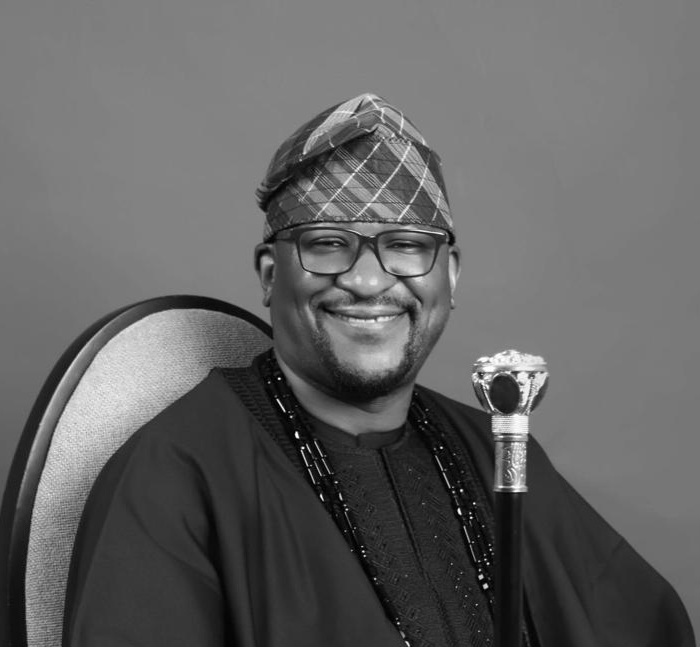

By
Dr. Preye Angaye, ACCA
Introduction
Few national debates are as persistent and as polarising as the question of whether
Nigeria is failing or prospering, and who bears responsibility: leaders or followers. On one
hand, Nigeria possesses vast human and natural resources, a dynamic private sector,
and cultural influence across Africa. On the other, it struggles with governance deficits,
insecurity, inequality, and institutional fragility.
This tension has produced a familiar narrative: a country of immense potential held back
by chronic dysfunction. But reducing the problem to a single cause such as bad
leadership or passive followership misses the deeper structural reality. Nigeria’s
condition is better understood as a complex interaction between leadership failures,
weak institutions, and societal complicity.
Is the Nigerian State Failing or Prospering?
The answer is dependent on the lens.
Evidence of Failure
A large body of academic literature points to persistent governance challenges since
independence. These include corruption, weak institutions, and lack of accountability,
all of which undermine development outcomes.
Scholars argue that Nigeria has underperformed relative to its potential largely due to
“corruption and bad governance”. The state has struggled to provide basic public goods
like security, infrastructure, and rule of law leading some analysts to characterise it as
suffering from a crisis of state capacity.
Furthermore, corruption is not merely incidental; it is often described as systemic,
eroding trust and weakening institutions that should enforce accountability.
Evidence of Progress
Yet, the “failing state” narrative is incomplete. Nigeria has made incremental gains in
several areas:
• Sustained democratic rule since 1999 (despite imperfections)
• Growth of sectors like fintech, entertainment (Nollywood), and telecoms
• Expanding middle class and entrepreneurial ecosystem
• Increasing civic awareness and political participation among youth
These developments suggest that Nigeria is not collapsing but rather progressing
unevenly, advancing in pockets while stagnating or regressing in others.
The Leadership Question: A Crisis of Vision and Accountability
Leadership remains central to Nigeria’s governance challenges. Many studies emphasise
that political elites often prioritise personal or group interests over national development.
Key issues include:
• Weak accountability mechanisms: Public officials often evade consequences for
misconduct
• Policy inconsistency: Frequent changes disrupt long-term planning
• Elite capture: State resources are concentrated among political and economic
elites
In this sense, leadership failure is not just about incompetence, it is about incentive
structures that reward rent-seeking over public service.
However, focusing solely on leaders risks oversimplification.
The Followership Question: Complicity, Constraints, and Culture
Blaming citizens outright would be unfair but ignoring their role would be incomplete.
Structural Constraints
Many Nigerians operate within:
• High poverty levels
• Weak access to justice
• Limited economic opportunities
These conditions can normalise survival-driven behaviours like petty corruption.
Societal Complicity
At the same time, public discourse increasingly acknowledges patterns such as:
• Vote-buying and clientelism
• Ethnic and religious voting blocs
• Low civic engagement outside election cycles
Even informal commentary highlights how governance failures are sustained by both elite
manipulation and citizen participation in flawed systems.
Trust Deficit
A deeper issue is the absence of a strong social contract. Citizens often do not see the
state as “theirs,” weakening the demand for accountability. Without this, democratic
pressure on leaders remains inconsistent.
Beyond Leaders vs Followers: The Institutional Problem
The most compelling insight from both academic and policy literature is that Nigeria’s
core challenge is institutional.
• Weak rule of law enables corruption
• Fragile bureaucracies undermine policy implementation
• Lack of continuity disrupts reforms
• Oversight institutions are often politicised
Even well-designed policies fail because institutions lack the capacity or independence
to implement them effectively.
This explains why reforms often produce limited results: good intentions collapse within
weak systems.
A Balanced Verdict
So, who is to blame?
• Leaders bear primary responsibility for setting direction, enforcing accountability,
and managing resources.
• Followers (citizens) influence outcomes through political behaviour, civic
engagement, and societal norms.
• Institutions ultimately mediate both—shaping incentives and outcomes.
The Nigerian condition is therefore not a simple blame game. It is a shared systemic
failure, with uneven responsibility but mutual reinforcement.
Practical Next Steps: How Nigeria Can Get It Right
Moving forward requires shifting from diagnosis to execution. The following are realistic,
evidence-based steps:
1. Strengthen Institutions, Not Just Personalities
• Reform judicial independence and enforcement capacity
• Digitize public finance and procurement systems to reduce discretion
• Empower anti-corruption agencies with autonomy and follow-through
Systems must outlast individuals.
2. Align Incentives for Political Leadership
• Electoral reforms to reduce vote-buying
• Transparent campaign financing
• Performance-based governance metrics
Leaders behave according to incentives. Change the incentives, and behaviour follows.
3. Rebuild the Civil Service
• Merit-based recruitment and promotion
• Continuous training and performance evaluation
• Protection from political interference
A capable bureaucracy is the engine of policy success.
4. Deepen Civic Responsibility and Accountability
• Civic education on rights and responsibilities
• Citizen-led monitoring of public projects
• Strengthening media and civil society
Accountability must be demand-driven, not just supply-driven.
5. Foster Economic Inclusion
• Job creation and SME support
• Reduce dependence on oil (diversification)
• Expand social safety nets
Economic security reduces vulnerability to corruption and clientelism.
6. Build a National Identity Beyond Ethnicity
• Promote inclusive governance
• Encourage cross-regional collaboration
• Reform federal structures where necessary
A shared sense of purpose strengthens collective accountability.
Conclusion
Nigeria is failing in certain aspects and also succeeding in others, hence it is a nation in
transition, caught between its immense potential and deeply entrenched structural
weaknesses.
The debate over whether leaders or followers are to blame is, in many ways, misplaced.
The real issue lies in the interaction between leadership, citizens, and institutions.
Fixing Nigeria will not come from a single reform or a single election. It will require
systemic change, sustained over time, driven by both responsible leadership and active
citizenship.
The path forward is difficult but not uncertain. The same forces that sustain dysfunction,
if redirected, can also drive transformation.
About Author

