

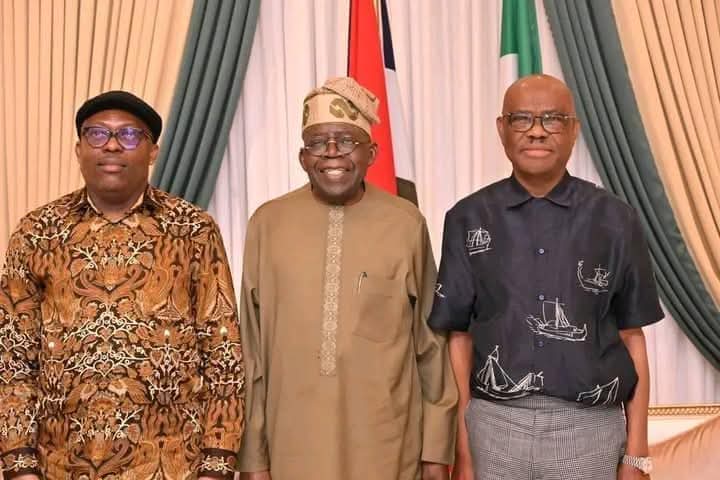

After months of intense political turmoil, the prolonged crisis rocking Rivers State appears to have reached a turning point following a high-level reconciliation meeting facilitated by President Bola Ahmed Tinubu and other key political actors.
Multiple sources confirmed to our correspondent that the peace process culminated in a marathon closed-door session held in Abuja on Thursday night. The meeting brought together Governor Siminalayi Fubara, the Minister of the Federal Capital Territory and former Rivers Governor, Nyesom Wike, Speaker of the Rivers State House of Assembly, Martins Amaewhule, and the embattled 26 lawmakers loyal to Wike.
Insiders familiar with the development disclosed that the reconciliation meeting was the outcome of a series of confidential engagements that had been going on for weeks, aimed at de-escalating the power tussle that had nearly paralyzed governance in the state.
A presidency source who pleaded anonymity revealed that President Tinubu had consistently maintained behind-the-scenes diplomacy in a bid to prevent a total breakdown of law and order in the oil-rich state. According to the source, “The President has always believed that Rivers State is too strategic to the country’s economic and political stability to be allowed to drift into chaos. He personally intervened to ensure both camps reached a political truce.”
The peace meeting reportedly witnessed emotional moments, with Fubara and Amaewhule seen shaking hands and even sharing light jokes, a sight unimaginable just weeks ago given the acrimony between both camps.
It will be recalled that the political crisis in Rivers State reached a boiling point in April when President Tinubu declared a State of Emergency following a series of face-offs between Governor Fubara and members of the state legislature, who had defected from the Peoples Democratic Party (PDP) to the All Progressives Congress (APC). This led to the purported impeachment moves against Fubara and the parallel operations of two Houses of Assembly in the state.
Tensions escalated further when administrative buildings were demolished, and the House of Assembly complex was barricaded, while the governor’s loyalists accused the pro-Wike lawmakers of attempting to usurp democratic processes.
The reconciliation process, observers say, marks a critical juncture in restoring stability in Rivers State. A joint communique is expected in the coming days, detailing the resolutions reached and possible terms of agreement, including legislative cooperation, withdrawal of legal suits, and restoration of administrative normalcy.
With this political thaw, attention is now shifting to how effectively the leaders will uphold the spirit of the truce and steer the state back to peace, development, and good governance.
About Author

